Running a Secret Santa in a school class
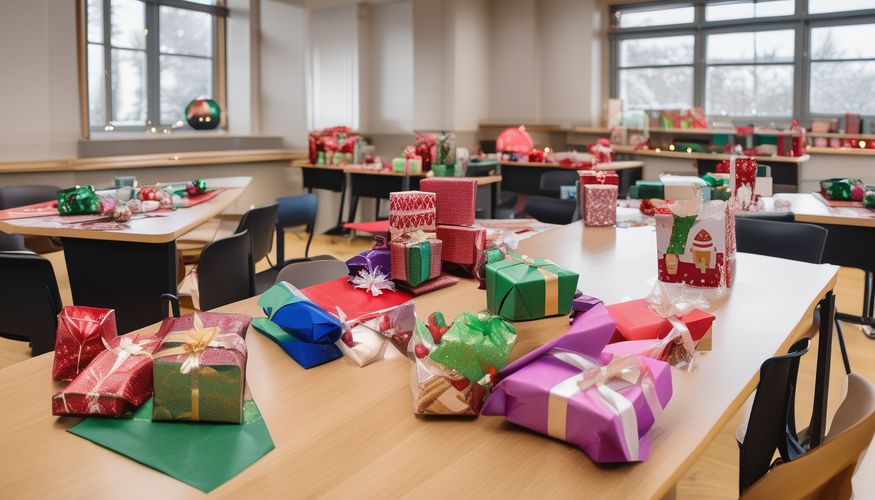
A class Secret Santa goes wrong in the same three ways every year. One child unwraps a pricey Lego set while the next one gets a pencil, two children draw each other's brother, and the boy whose family does not celebrate Christmas sits at the back. All three are fixable in the first week of December, with about an hour of the teacher's or the class parent's time.
Set a spending limit before anything else
Fix the budget first and put it in writing. For primary school, a budget of 5 to 10 is what every family can carry; for secondary school, 10 to 15. Say it as a number on the note that goes home. "A small gift" means spending 3 to one parent and 30 to another.
That note also carries the dates (draw, gift deadline, exchange), the rule that participation is voluntary, and the rule that home-baked food stays home, because of allergies and because nobody wants to police a box of brownies. Point families towards a book, a set of pens, a small game or a craft kit.
Have a plan for the child whose gift does not turn up. A spare book and a bar of chocolate in the teacher's drawer, bought from the class fund, means nobody sits empty-handed on the day.
Draw the names without the paper slips
Names on paper in a hat produce a child who draws himself, a child who is away that day and a child who announces who she got before the bell. Draw the names online. When you draw names online, each participant gets their name by email with the budget attached, nobody draws themselves, and the teacher has no envelope to lose.
For a primary class, send the draw to the parents' email addresses; the child hears the name at home and the surprise survives the playground. In secondary school the pupils can receive it themselves.
Wishlists solve the problem of buying for a classmate you barely know
The hard part of a class draw is buying for the child you have never spoken to. Ask each family to help their child create a wishlist with three to five things within the budget: a Dog Man book, a set of Posca pens, a Dobble game, a sticker album. The giver picks one and reserves it, so a class of 28 does not produce four copies of the same book.
Keep the lists short and school-safe. No electronics, no slime, nothing that makes a noise during a lesson. Three ideas that fit the budget give a giver enough choice; twelve ideas mean the parent stops reading.
Not every family celebrates Christmas, or has money spare for it
Call it a winter gift exchange on the note home, and the child who does not celebrate takes part without a conversation. This costs nothing and settles most objections.
Money is the quieter problem. A family that cannot spare even a small amount in December will not say so. Ask the parents' association to put a modest sum in a class pot at the start, and let the teacher quietly cover a gift or two from it. No child needs to know which gifts came from the pot, and a teacher usually knows which families to think of.
Give the exchange a full afternoon
Put the exchange in the last lesson before the holiday and give it the whole hour. Each child opens their gift, guesses who drew them, and the giver stands up. Small clues attached to the parcel during the week ("I sit two rows behind you") make the guessing part of the fun.
Hot chocolate and a playlist if the school allows it, photos only with the parents' permission, and a quiet corner for the child who finds thirty people looking at them too much. The exchange is what the children remember; the gift is mostly forgotten by January.
Start with the note home this week, and set the draw up the same evening. You can organise a Secret Santa for the class in a few minutes, with the budget and the wishlists in the same place as the draw.