Baby registry items your house needs before the babysitter comes
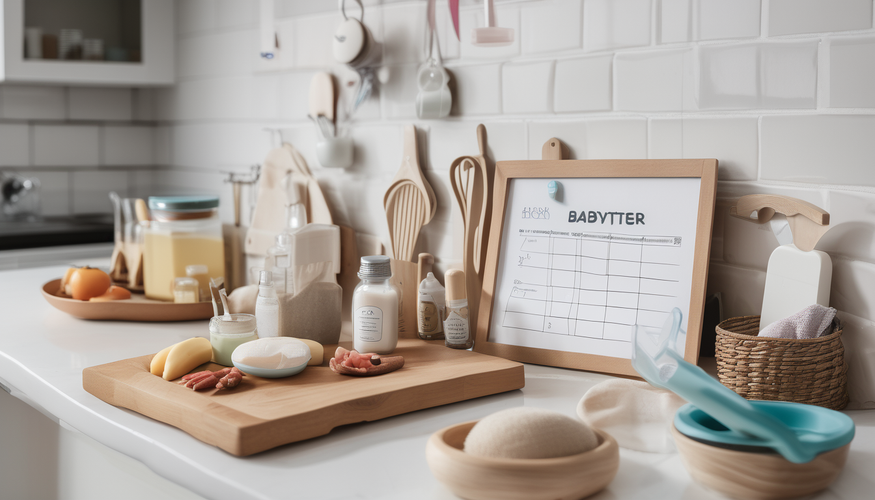
The first night out since the baby arrived, and the sitter texts at half past eight: where is the thermometer, and does he eat the yoghurt or the mashed pear? Every minute she spends searching the kitchen is a minute she is not watching your child. Stock the house once, properly, and the evening runs itself.
Keep an emergency kit within reach
One drawer or basket, labelled, in the kitchen. In it: plasters, a digital thermometer, children's paracetamol with the dose for your child's weight written on the box, and any medicine your child takes, with the time it is due. If your child has an inhaler or an adrenaline pen, it goes on top, with the instructions on a card next to it.
Tape one card inside the drawer with the numbers: both parents, the family doctor, the poison centre for your country, and the address of the nearest hospital with a children's ward, written out in full so the sitter can read it to a taxi driver. Add the emergency number (112 in most of Europe), because a sitter who has just moved to the country may not know it.
Stair gates and cabinet locks are already there if you have a crawler. What tends to be missing is a torch with working batteries, for the evening the fuse goes.
Food, without the guesswork
Keep an evening's worth of food that needs no cooking: rice cakes, a banana, cheese cubes, a fruit pouch, a pot of yoghurt. For a baby on formula, leave measured powder in a dispenser and the bottles washed and lined up; for expressed milk, one bottle in the fridge with the warming instructions on a sticky note.
Put the meal plan on the fridge: what he eats at six, what he is allowed as a snack, and the allergies in capital letters. A sitter will not ring you about the yoghurt if the answer is on the fridge.
Toys and comfort items that keep the evening calm
Make one box the babysitter box: crayons and a colouring pad, a couple of wooden puzzles, Duplo, two or three picture books. Nothing that lights up or plays music, because the sitter's job is to get the child down by half past seven and the singing dog is working against her.
Leave the comfort things out where they can be seen: the muslin, the sleep bag on the bed, the specific rabbit that goes to sleep with him and the spare one in the cupboard for the night the first one is in the wash. Write the bedtime routine down as steps. "Bath, milk, two books, light off, door ajar" is enough; the order is what the sitter needs.
Cleanup and bath supplies
Nappies, wipes, a change of clothes and a bin bag in one basket, in the room where changes happen. A second basket in the living room saves a trip up the stairs with a child under one arm. Add a stain spray for the sofa and a roll of kitchen paper.
If the bath falls in the sitter's hours, leave the towel, the wash and the bath thermometer ready on the side. The one line to write down is the one every health service repeats: never leave the child alone in the water, even for the doorbell.
The babysitter sheet
One sheet. A binder never gets read. The routine, the house rules (screen or no screen, which snacks), the Wi-Fi password, where the spare key is, and the time you expect to be back. Add the number of a neighbour or a grandparent who lives within ten minutes, in case the sitter needs an adult on the spot and you are forty minutes away.
Leave 20 in cash in the drawer for a taxi or a pizza. A sitter who knows there is money for a taxi makes better decisions than one who is doing the maths.
Most of this kit is cheap and you buy it once. Put the thermometer, the dispenser and the babysitter box on your list; grandparents who want to help often pick exactly these, since they will be the ones using them on Friday nights. You can create a baby registry with these items on it before the first night out.